When you vet a machining supplier, you usually see a row of logos: ISO 9001, AS9100D, IATF 16949. They are easy to treat as interchangeable, and most quote requests never ask what they mean. But each one says something specific about how a shop is run, and they are not equivalent. This article explains what each standard covers, and what it means when one supplier holds all three.
ISO 9001 is the baseline
ISO 9001 is the general quality management system (QMS) standard, and it applies to almost any industry. It means a shop has documented processes, checks its own work, tracks nonconformances (parts that fail a check) and runs continuous improvement. It is the baseline: the shop has a real quality system, not just experienced operators relying on memory. What ISO 9001 does not do is impose the deeper discipline that high-consequence industries demand — and that is where the other two standards come in, both built directly on top of it.
AS9100D adds aerospace discipline
AS9100D is the aerospace QMS standard. It contains all of ISO 9001, then adds the extra controls that commercial aerospace and UAV (drone) work require:
- Risk management built into the process, rather than addressed only after a problem arises.
- Configuration management, so the part you approved and the part that ships are provably the same revision.
- Full traceability from raw-stock heat/batch through every operation to the finished part.
- Counterfeit-part prevention, so material is what the certificate says it is.
- First-article inspection (FAI) — a formal, full-dimensional sign-off on the first piece before the run continues.
In short, AS9100D is about proving on paper that every part is the part you approved. For a buyer, it signals a shop that can be trusted with work where a single defective piece is costly.
IATF 16949 adds automotive prevention
IATF 16949 is the automotive QMS standard. It also builds on ISO 9001, but its emphasis is different: preventing defects across high volumes. Its hallmark tools are APQP (plan quality in before the first chip is cut), PPAP (formally prove a process can repeat the part), and statistical process control (SPC) (catch drift mid-run, not after the fact). Where AS9100D focuses on traceability and configuration, IATF 16949 focuses on making the thousandth part identical to the first.
Comparison at a glance
| ISO 9001 | AS9100D | IATF 16949 | |
|---|---|---|---|
| Industry focus | General, any sector | Commercial aerospace & UAV | Automotive |
| Built on | The base standard | ISO 9001 + aerospace clauses | ISO 9001 + automotive clauses |
| Core promise | Documented QMS, self-checking, continuous improvement | Prove every part matches the approved revision | Make the 1,000th part identical to the 1st |
| Signature tools | Process control, nonconformance handling | Risk & configuration management, full traceability, counterfeit-part control, FAI | APQP, PPAP, SPC, defect prevention |
| What it tells a buyer | Real quality system, table stakes | Aerospace-grade traceability & sign-off discipline | High-volume process control & defect prevention |
| Scope | A quality-management system, not an industry operating licence. | ||
What holding all three signals
A shop with only ISO 9001 has a working quality system. Add AS9100D and it also has aerospace-grade traceability and first-article discipline. Add IATF 16949 and it has automotive-grade process control and defect prevention on top of that. Holding all three at once is uncommon, and it signals something specific: the same floor is disciplined enough to satisfy aerospace traceability and automotive process control simultaneously. Read all three logos as "this shop runs to the stricter of two demanding standards on every job," not as a marketing flourish.
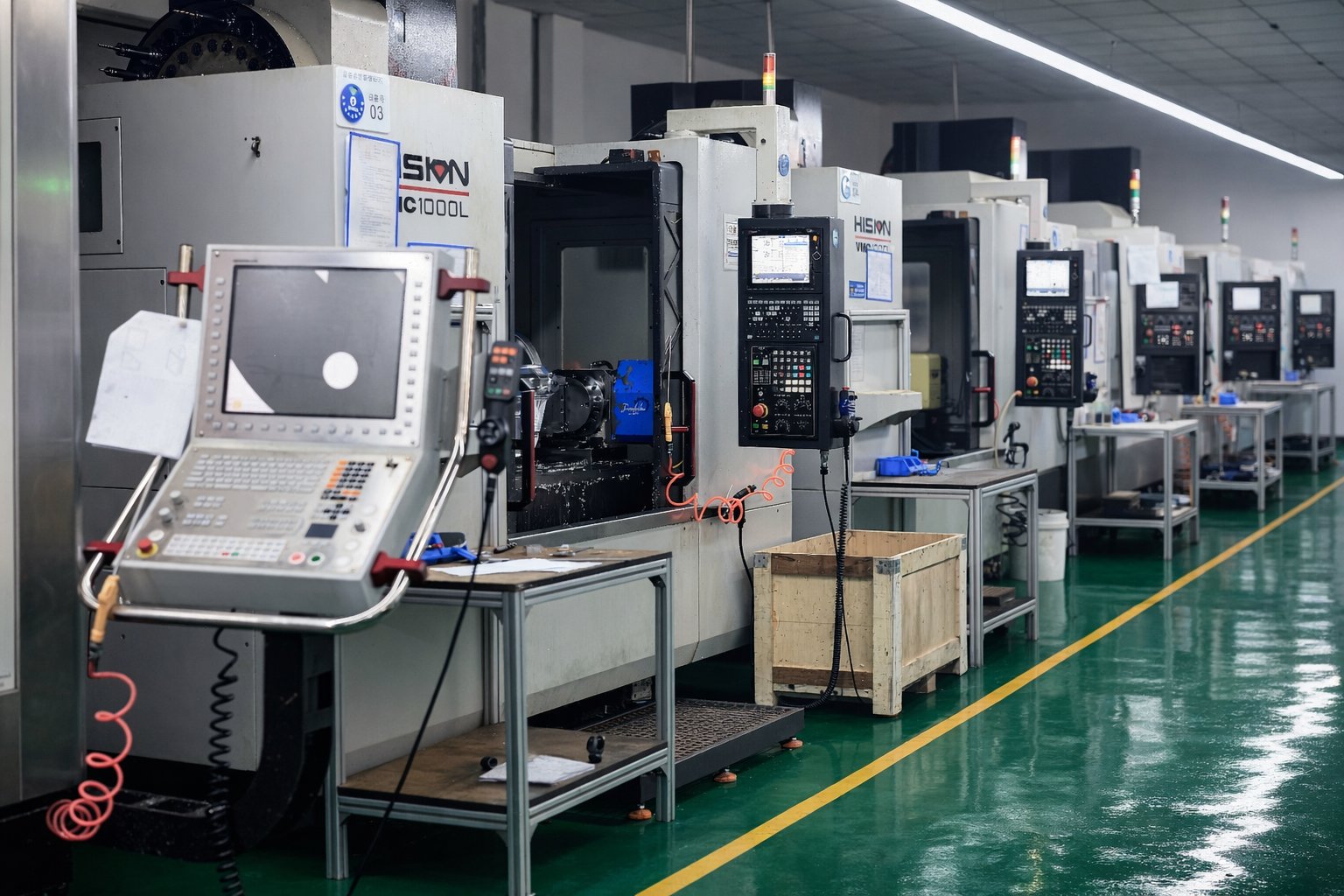
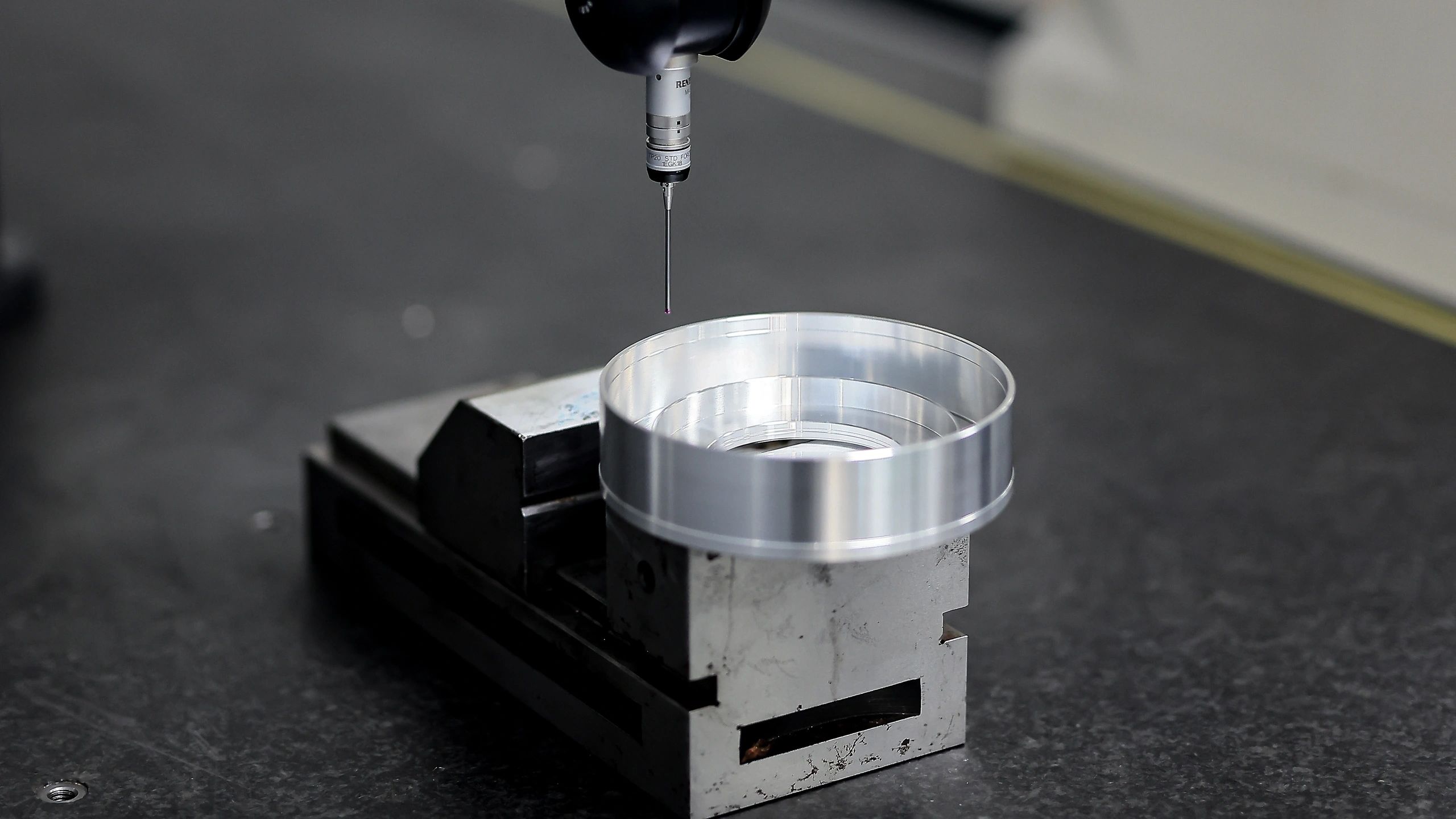
That's the posture at Fenva. We hold ISO 9001, AS9100D and IATF 16949, and we run roughly 97 CNC machines (3-, 4- and 5-axis milling plus CNC turning) across about 7,600 square metres in Suzhou, with in-house CMM and vision inspection. One point on scope: these are quality-management-system certifications, not industry operating licences. Our aerospace experience is commercial aerospace and UAV components; in medical, we make parts for medical and lab equipment, not finished medical devices.
Quick takeaways
- ISO 9001 = a real QMS baseline.
- AS9100D = ISO 9001 plus aerospace traceability, configuration management, counterfeit-part control and first-article rigor.
- IATF 16949 = ISO 9001 plus automotive APQP, PPAP, SPC and defect prevention.
- All three together = a floor disciplined enough for aerospace and automotive at once.