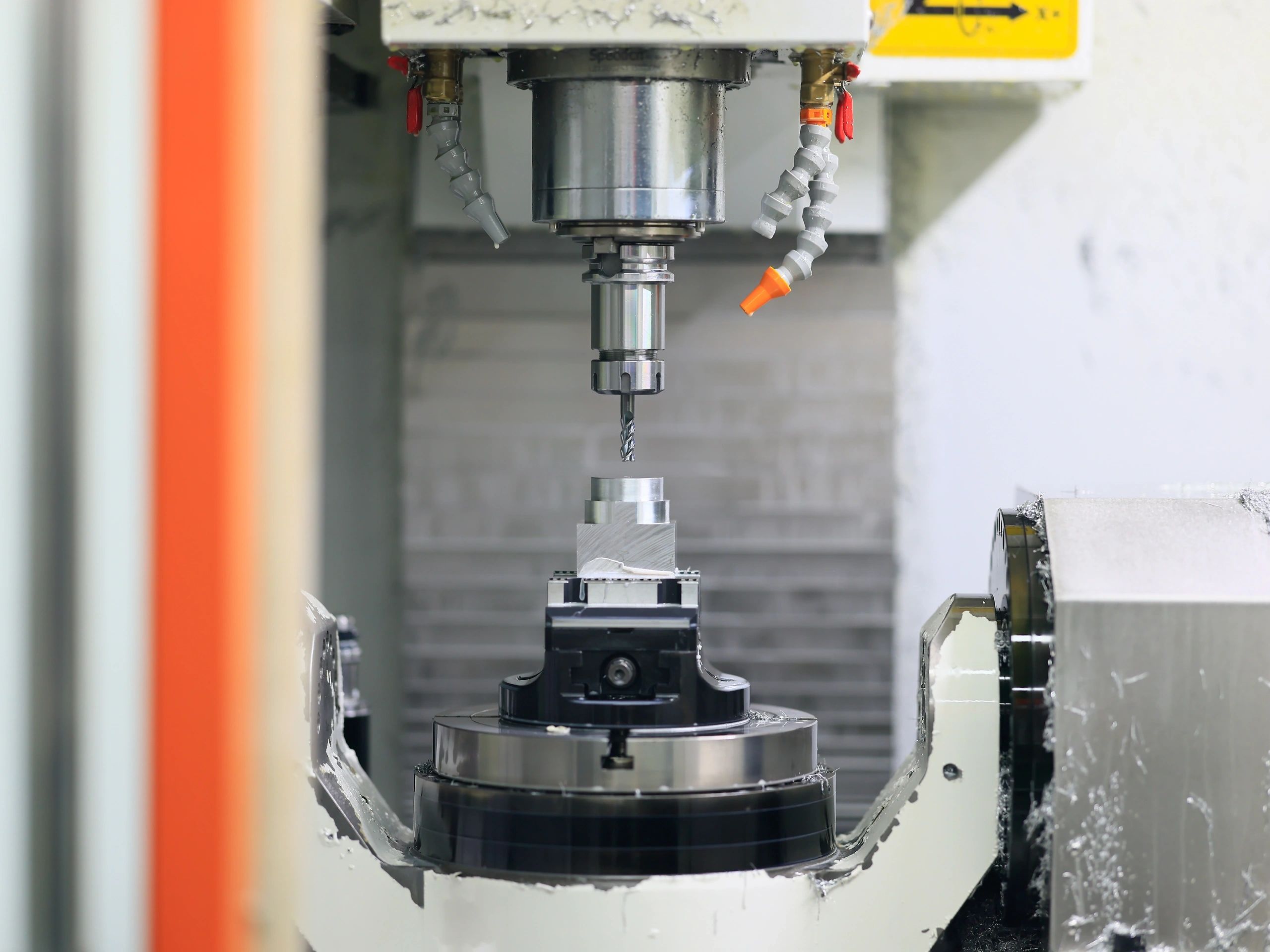
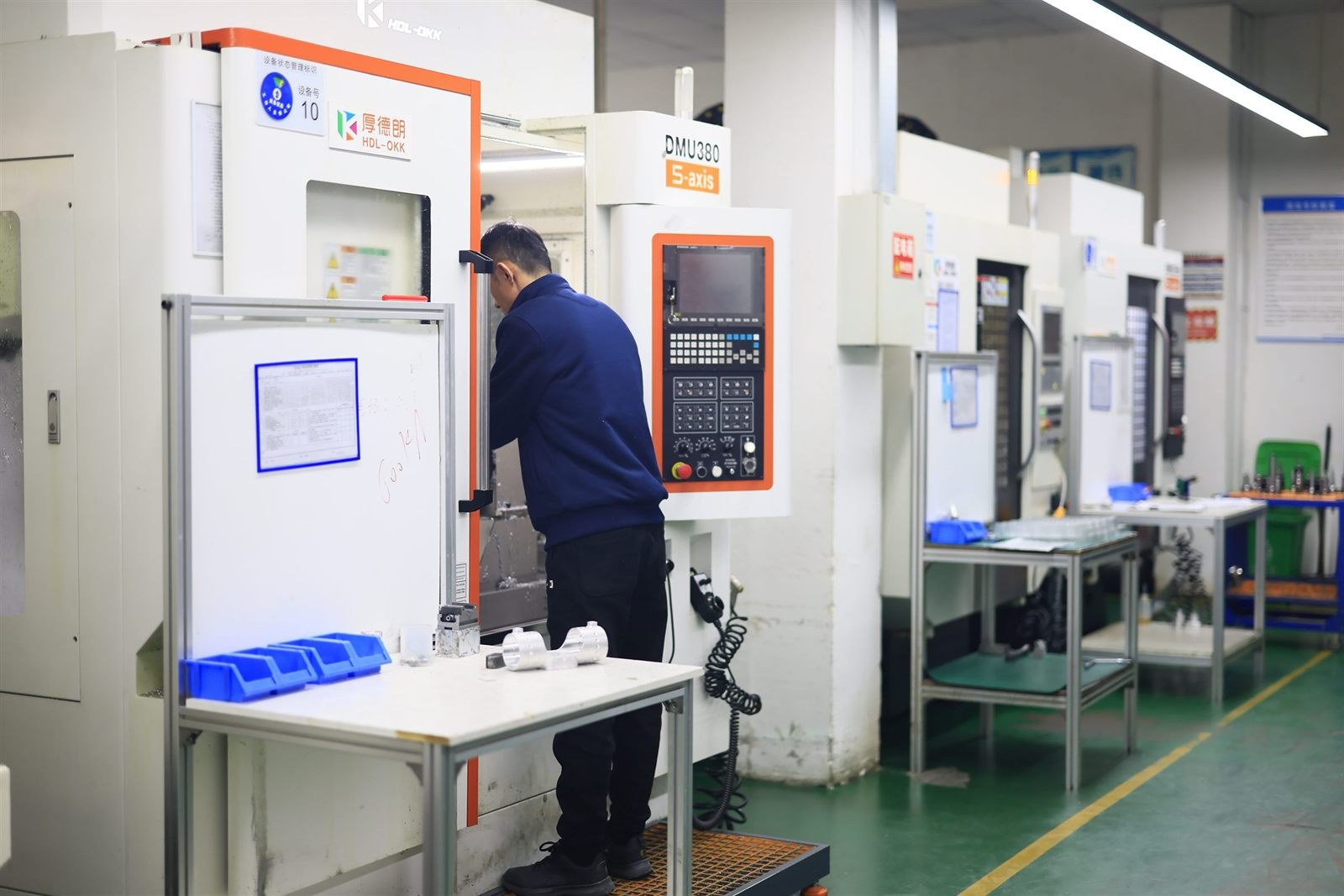
"What's your minimum order?" is often the first question buyers ask, having been caught out by injection molding or casting, where a steel mold runs into five figures and cannot be justified for a handful of parts. CNC machining is different: there is no hard tooling. We cut your part from a solid block using the same machines and the same program whether you need 1 piece or 1,000. That is why Fenva has no minimum order quantity. We are glad to make a single prototype and carry that exact part through to production.
Why no tooling changes everything
Molding and casting require a dedicated mold, built before a single good part exists. That mold cost is spread across the run, so each of 10 parts carries a heavy share of it, while at 10,000 it is negligible. That is what an MOQ is: a floor set high enough to make the tooling pay for itself. CNC has no equivalent. Its "tooling" is a CAD program and standard cutters we already own. The setup cost is real but modest, and it is the same setup whether the run is one part or a hundred. So one piece is feasible and priced honestly, never loaded with a mold that is used only once.
When CNC beats casting and 3D printing at low volume
| Process | Hard tooling? | Best volume | Low-volume cost | Material & accuracy |
|---|---|---|---|---|
| CNC machining | No | 1 to a few thousand | Viable at qty 1 | Full metals, tight tolerances |
| Injection molding / die casting | Yes (expensive) | Thousands+ | Tooling kills it | Limited to mold alloys / resins |
| 3D printing (metal / plastic) | No | 1 to dozens | Cheap for 1, scales poorly | Limited materials, looser tolerances / finish |
3D printing is well suited to an early form-and-fit check, but it falls short precisely where a functional part cannot compromise: tight tolerances, true engineering metals, and a genuine machined surface finish. If your prototype must be 6061 or 316, hold a press fit, or carry load, CNC is usually the sound choice even at quantity one. Casting and molding become economical only once volume is high enough to spread the mold cost across the run; below that point, CNC reaches the first part faster and costs less overall.
The prototype-to-production path, same shop, same drawing
- Prototype. One or two pieces to prove form, fit, and function. Quote in 48 hours, parts in roughly 10–15 business days.
- Bridge / low-volume. A pilot batch while you finalize the design or wait on a forecast, with no commitment to a thousand units.
- Production. Scale to repeat batches, built to the same approved drawing, on the same machines, with the same inspection.
- Spares. Years later, re-order 5 of the same part, with no re-tooling and no MOQ penalty.
This matters because the part you approve as a prototype is the part you get in production: same program, same fixtures, same CMM and vision inspection. The quantity changes; the part doesn't.
Cost-per-part falls with quantity, and that's fine
No MOQ does not mean a flat price. Cost per piece falls as volume rises, because setup, programming, and first-article inspection are spread across more parts, and because larger runs let us buy material in more efficient stock sizes. A small run remains viable and is priced honestly: you are welcome to order 5 parts, and the per-piece rate simply reflects the setup. Prove the part first, commit to volume second.
A new part carries one-time costs that are independent of quantity: CAM programming, machine setup and tuning with trial cuts to refine it, a custom fixture for many geometries, and an extra blank or two of raw material for those trials. Spread over hundreds of pieces, they disappear into the unit price; on a run of one or two parts, they account for most of the cost. That is why the same part costs less per piece at higher quantity. Even for a single part, we still buy the extra stock and run the trial cuts to prove a new setup, because that work is what makes the first part right. The no-minimum-order policy holds: we are glad to make a single part. This is simply what one part involves. For the full breakdown, see How a CNC part is priced.
Quick takeaways
- CNC has no hard tooling, so one piece is genuinely feasible, and Fenva has no MOQ.
- Below high volume, CNC beats casting (no mold cost) and 3D printing (real metals, tight tolerances, true finish).
- Cost per part falls with quantity, but small runs stay viable and honestly priced.
- Prototype, bridge, production, and spares all run from the same drawing, on the same machines, with the same inspection.