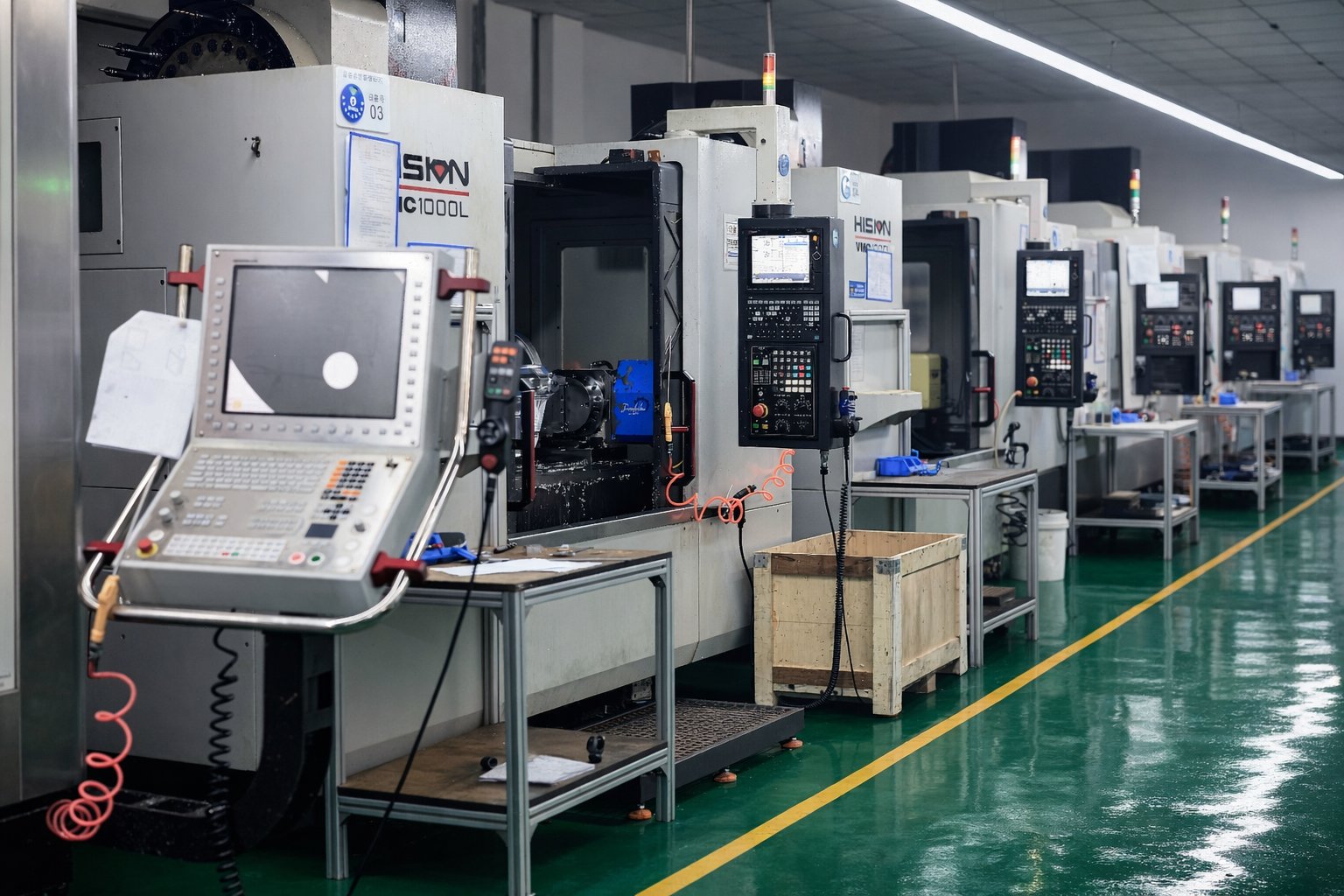
The right machining process is determined by the part's geometry. This guide outlines which process suits which part, and how each one affects cost.
Which process fits which part
| Process | Best for | Typical parts |
|---|---|---|
| Turning | Round, axis-symmetric | Shafts, pins, fittings, bushings |
| Milling (3/4/5-axis) | Complex, non-round, prismatic | Housings, brackets, manifolds, plates |
| Mill-turn | Round + flats/holes in one setup | Valve bodies, connectors, shafts with features |
| Swiss | Long, slender, small-Ø at volume | Pins, screws, medical & electronic parts |
| EDM (wire / sinker) | Sharp internal corners, hardened metals, fine profiles | Dies, slots, keyways, hardened tool steel |
Turning
The part rotates while a fixed tool cuts into it. Material is removed quickly, which keeps the unit cost low on round parts. There is also a finish advantage: the tool marks left by turning all run in one direction, so they are far less visible than the marks on a milled face.
Milling (3-, 4-, 5-axis)
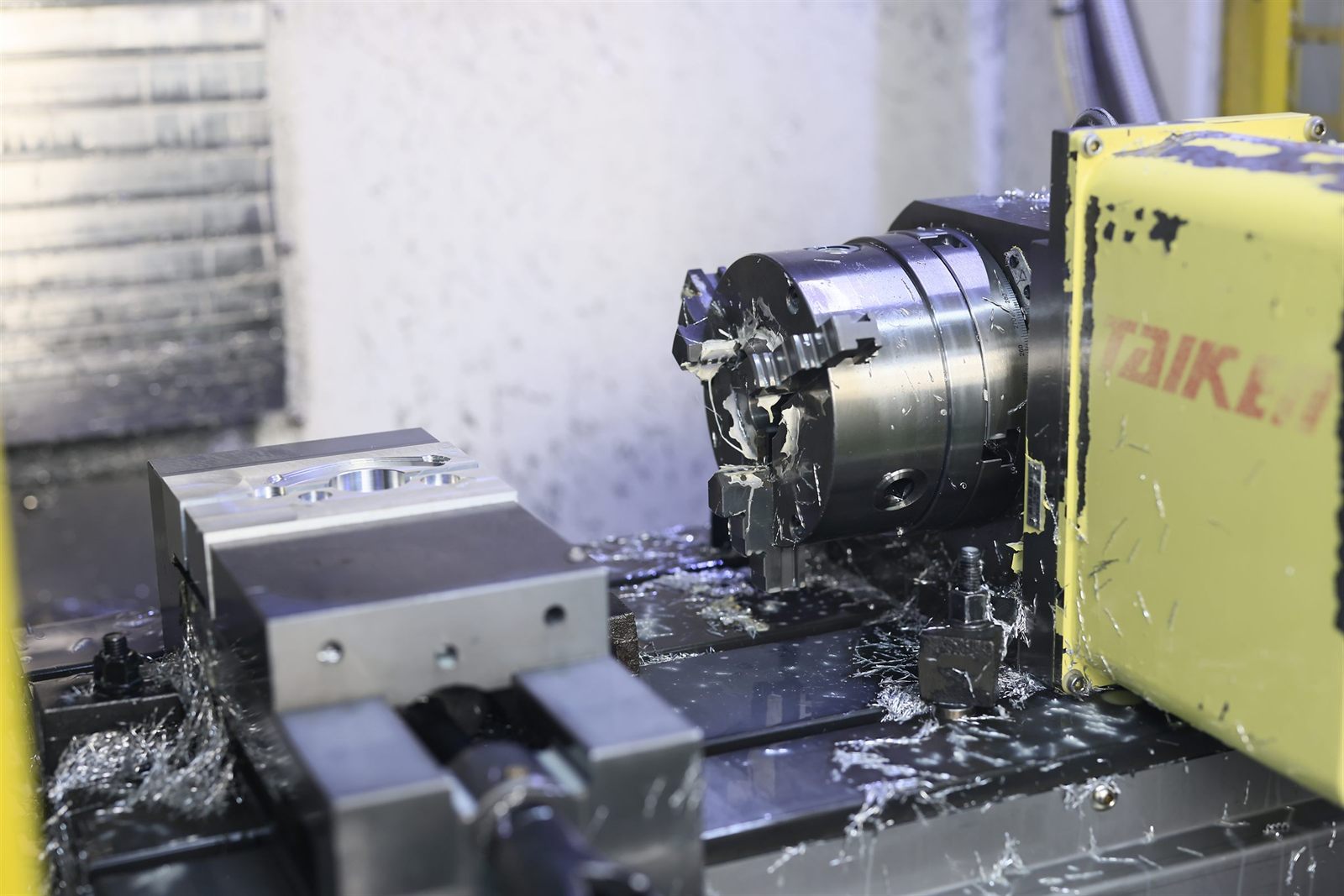
The tool spins while the part stays fixed, which suits complex, block-like (prismatic) shapes. A 5-axis machine can reach more faces in a single setup, reducing the number of fixtures and holding tighter true position between features.
Mill-turn & Swiss
Mill-turn does both jobs on one machine, turning the round features and milling the flats and holes, which lowers unit cost and shortens lead time. Swiss machining adds a guide bushing that supports the bar right at the point of cut, holding tight accuracy on long, slender, small-diameter parts in volume.
EDM
EDM uses a controlled electrical spark instead of a cutting tool, so it can produce sharp internal corners, cut hardened materials, and reach fine profiles a cutting tool can't.
How to choose
If you are unsure which process your part requires, send us the 3D model. We will select the right one during DFM review and quote within 48 hours.