Both finishes protect aluminium, but they are engineered for different purposes. This guide compares them on colour, hardness, thickness and dimensional impact, with a clear rule for selecting the right one.
What anodizing is
Anodizing uses an electrochemical bath to grow a hard aluminium-oxide (Al₂O₃) layer into the metal, rather than laying a coating on top. Because the layer is part of the surface itself, it will not chip or peel. A single process delivers three functions: protection, decoration and electrical insulation.
Side by side
| Type II (sulfuric) | Type III (hard) | |
|---|---|---|
| Thickness | 3–5 µm | 8–25 µm |
| Hardness | ~300–400 HV | ~400–600 HV |
| Colour | Any colour / RAL | Dark only (black / grey) |
| Wear | Moderate | High |
| Corrosion | Moderate | High |
| Cost | $$ | $$$ |
| Best for | Colour and cosmetic finishes | Wear surfaces, sliding fits, aerospace |
Type II (standard anodize)
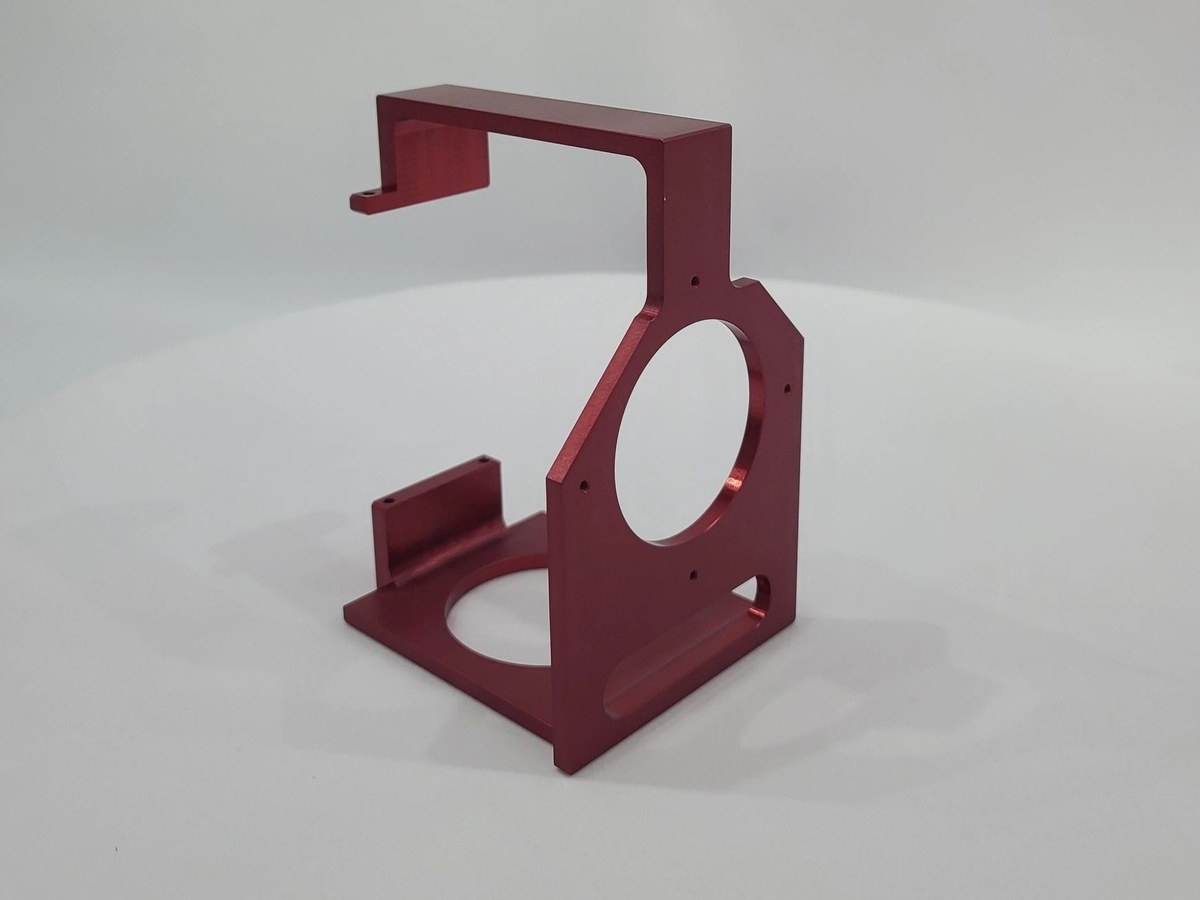
A thin film with good corrosion resistance and a wide colour range. It's the default choice for coloured and cosmetic parts where appearance matters.
Type III (hard anodize)
A thick, hard, wear-resistant layer for sliding surfaces, abrasion-prone parts and aerospace work. The trade-off is colour: only a few dark shades are available.
Three common mistakes
- Writing "anodize" with no type — always specify Type II or Type III.
- Ignoring Type III growth on tight bores — machine the bore undersize, or mask it off, to leave room for the coating.
- Expecting a bright colour from Type III — it's available only in dark shades.
Selection rule
Colour or cosmetics → Type II. Wear or hardness → Type III. Threads and critical bores → mask them off.